



Traders were very much on edge all weekend, bracing for a frenetic week with multiple impactful earnings reports, a Fed interest rate-setting meeting, tariffs suddenly front and center again, $100 oil and who knows what from an increasingly erratic Trump.
Conventional wisdom on Wall Street is that US foreign policy and military strategy is now being dictated by the interplay between the oil price and the election calendar and the main reason for Sunday’s pause in US airstrikes was that the “100/4” threshold had been breached again ($100+ oil and $4.00+ at the pump) with the midterms on the horizon and “coincidentally” right before a Fed interest rate decision.
Markets got off to a strong start on Monday with the stock indexes staging an early relief rally as oil prices fell back sharply. But a wobble quickly set in as chip makers got hammered again on growing fears that Chinese AI competition may flood the market with cheaper and more powerful products along with worries about persistent circular financing and the indexes closed essentially unchanged.
The price of Nvidia, the largest component stock in large cap indexes, fell so hard that by lunchtime it was no longer the world’s most valuable company and Apple was top dog again.
The chip rout deepened overnight in Asia as AI greed turned to fear, with the South Korean market crashing by 11%. But solid earnings from the likes of Coca-Cola, Ford, Paypal and Boeing impressed Wall Street on Tuesday and, as the plunge in semiconductor stocks eased moderately, the S&P 500 index drifted slightly higher, while the NASDAQ-100 closed marginally in the red before the baton was passed to a still-jittery Asia.
There was an unusual whiff of intrigue as Fed Day dawned in New York on Wednesday. Going into the 2pm ET announcement, the market probabilities were at 30% for a 0.25% Fed Funds Rate hike and 70% for no change.
As it turned out, the FOMC voted not to change the rate with three dissenting committee members voting for a hike. Chairman Warsh held a babbling, muddled and evasive word salad of a press conference that only amplified concerns that he is in Trump’s pocket. The three dissents indicate the direction of travel and a rate increase at the next meeting on September 16th is still very much on the table (see INTEREST RATE EXPECTATIONS below).
Warsh’s utter disaster of a performance (see .. AND I QUOTE .. below) poked the bear in the form of bond vigilantes who constantly fear a feeble Fed response to inflation and that was bad news for long term bond investors, variable rate mortgage holders or new home buyers (see AVERAGE 30-YEAR FIXED MORTGAGE RATE below).
While short term interest rates eased, longer term interest rates exploded higher with the 30-year Treasury rate touching more twenty-year highs, breaking through 5.20%. Stocks tumbled, especially the tech-heavy NASDAQ-100 which entered official correction territory after suffering its longest losing streak since the dark days of October 2022. A further escalation and expansion of the Middle East conflict didn’t help. Meta, RobinHood and Qualcomm all disappointed with earnings after the close but Microsoft and Starbucks surprised to the upside.
Wall Street was merciless in its punishment of Meta on Thursday, but rewarded Microsoft by adding half a trillion dollars to its value, a record for a one-day gain in an individual stock. Dip-buyers finally dived back in, scooping up beaten-down tech names in particular (except for Meta), partly triggered by a cooling PCE annual inflation reading of 3.7% and despite an underwhelming annualized Q2 GDP growth estimate of 1.5%.
The indexes all closed substantially higher, enjoying their best day in over a year. Bonds, however, made no such recovery as interest rates stayed stubbornly elevated. Apple’s after-hours earnings were perfectly fine but traders focused on the supply and cost concerns over component parts and memory for its products and the stock price dumped, pushing it back to second place again in the Biggest Company In The World standings after just four days at the top. There were no such reservations about Amazon though, after it blasted through expectations with its report and the stock zoomed higher.
The risk-on euphoria spread to Asia where the indexes bounced back spectacularly from their recent plunges, with South Korea jumping by a record 18%. The bargain-hunting-driven burst of momentum initially carried into New York on Friday and the indexes got off to a fast start helped by predictably decent Q2 earnings from Chevron and Exxon-Mobil. Stocks closed the session higher again, managing to close out a wildly volatile week in the green but still lower for the month of July.
Some other things I’m thinking about ..
Despite its pre-IPO price of $135, no-one who get swept up in the hype got any “can’t miss” SpaceX stock for less than $150 on the first day of trading. Unless they dumped it quickly, they were down at least 30% last week in a little over thirty trading days. Anyone unlucky enough to have bought at the high on June 16th has seen the value of their investment cut in half already. And all this before August 6th’s unlock of 20% of the total number of shares at which time insiders can begin selling their stocks. Maybe people should have read Josh Brown’s Instagram post first.
If you are not yet a financial planning or investment management client of Anglia Advisors and would like to explore becoming one, please feel free to reach out to arrange a complimentary no-obligation discovery call with me.
ARTICLE OF THE WEEK ..
“The financial environment is much more complex now, and it is much easier to make bad decisions” .
Economist and top financial columnist Allison Schrager of Bloomberg asks; why are Americans so financially illiterate?
.. AND I QUOTE ..
“Warsh suggested Fed policymakers should follow the bond market rather than lead it, the bond market’s response was to punch him in the face.”
Christian Hoffmann, head of fixed income at Thornburg Investment Management, following Fed chairman Warsh’s credibility issues last week (see above).
LAST WEEK BY THE NUMBERS:
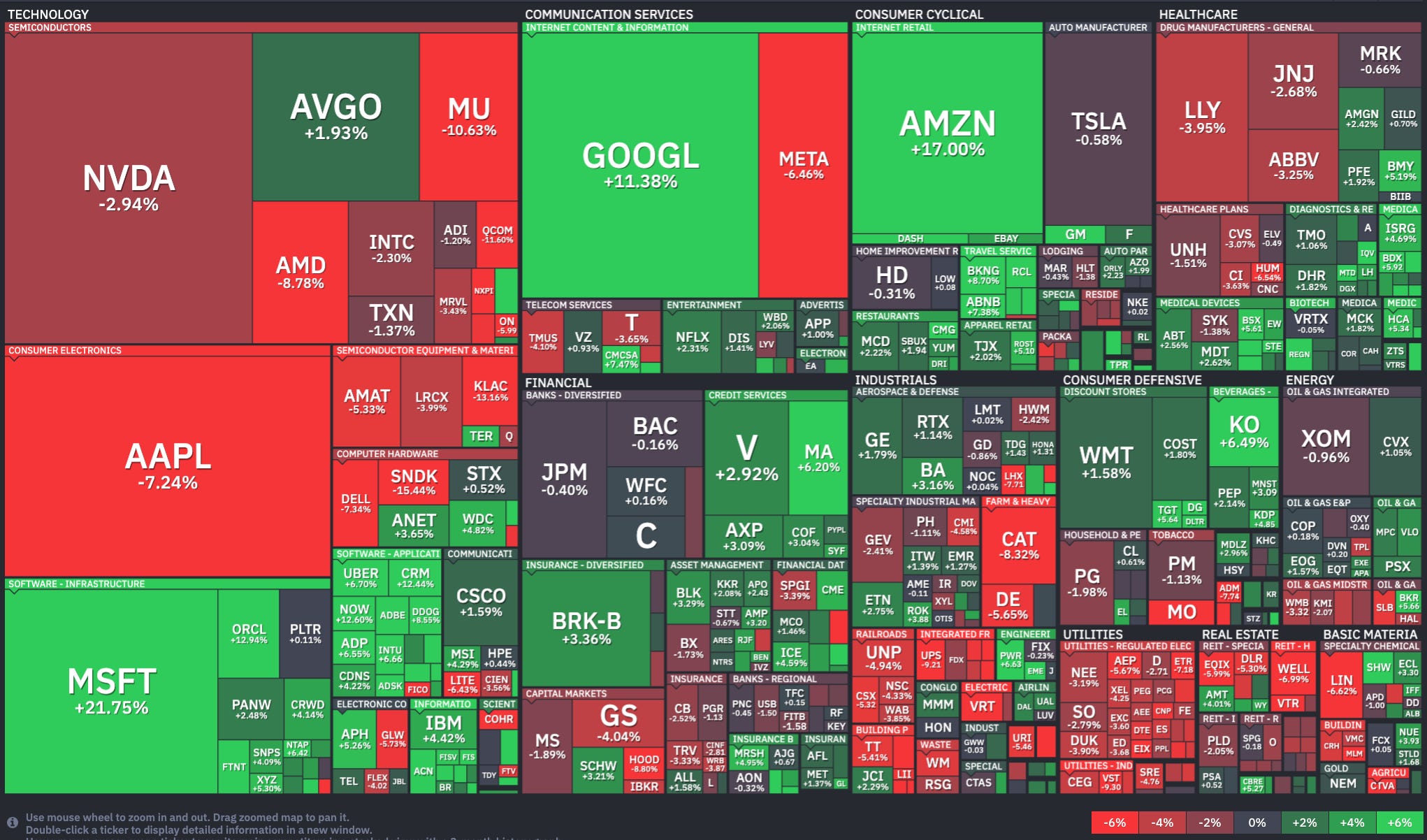
Last week’s S&P 500 market color courtesy of finviz.com
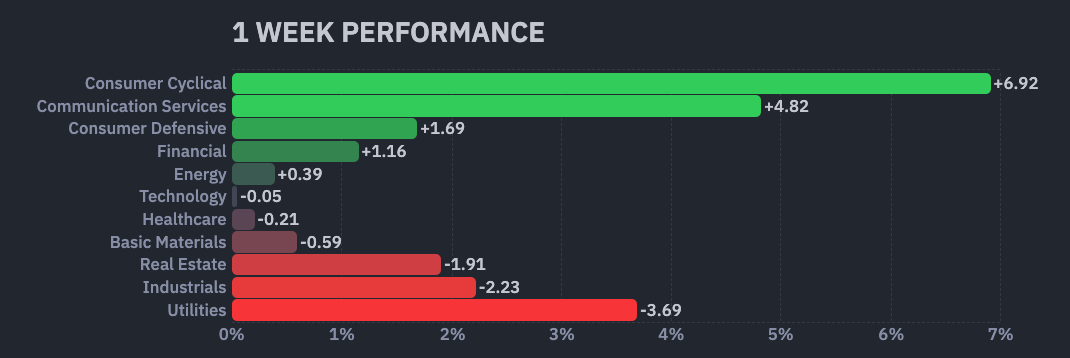
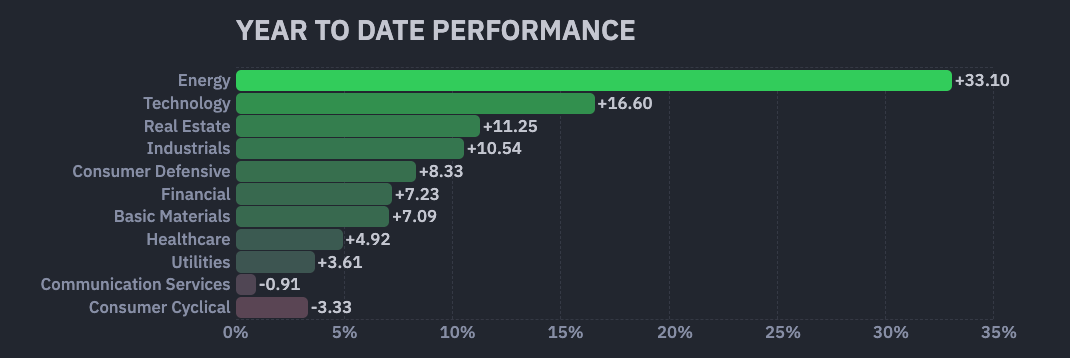
SPY, a US Large Cap ETF, tracks the S&P 500 index, made up of 500 stocks from a universe of the largest US companies. It rose 0.8% last week, is higher by 3.9% over the last three months and is up by 10.1% so far this year.
IWM, a US Small Cap ETF, tracks the Russell 2000 index, made up of the bottom two-thirds in terms of company size of a universe of 3,000 of the largest US stocks. It rose 0.6% last week, is higher by 4.5% over the last three months and is up by 18.8% so far this year.
VXUS, an International Non-US ETF, tracks the MSCI ACWI Ex-US index, made up of over 8,500 of the largest names from a universe of stocks issued by companies from around the world excluding the United States, in both developed and emerging markets. It rose 1.4% last week, is higher by 2.4% over the last three months and is up by 12.8% so far this year.
Data shown is total return (including dividends)
INTEREST RATES:
FED FUNDS RATE * 3.625% (unchanged from a week ago)
PRIME RATE ** 6.75% (unchanged from a week ago)
3 MONTH TREASURY 3.83% (3.85% a week ago)
2 YEAR TREASURY 4.28% (4.18% a week ago)
5 YEAR TREASURY 4.45% (4.28% a week ago)
10 YEAR TREASURY *** 4.75% (4.55% a week ago)
20 YEAR TREASURY 5.28% (5.07% a week ago)
30 YEAR TREASURY 5.27% (5.06% a week ago)
Data courtesy of the Federal Reserve and the Department of the Treasury as of Friday’s market close.
* Decided upon by the Federal Reserve Open Market Committee at periodic meetings 8x a year. Used as a basis for overnight interbank loans and for determining high yield savings interest rates.
** Wall Street Journal Prime Rate as of Friday’s close. Moving in lockstep with the Fed Funds interest rate, this measure is used as a basis for determining certain consumer loan interest rates such as credit cards, auto loans, personal loans, home equity loans/lines of credit and securities-based lending.
*** Used as a basis for determining mortgage interest rates.
AVERAGE 30-YEAR FIXED MORTGAGE RATE:
6.66%
One week ago: 6.58%, one month ago: 6.45%, one year ago: 6.72%
Data courtesy of the Federal Reserve Bank of St. Louis.
INTEREST RATE EXPECTATIONS:
Where will the Fed Funds interest rate be after the next rate-setting meeting on September 16th?
0.25% higher than now .. 72% probability (82% a week ago)
Unchanged from now .. 28% probability (18% a week ago)
0.25% lower than now .. 0% probability (0% a week ago)
With three more rate-setting meetings this year, what is the most commonly-expected number of remaining Fed Funds interest rate changes in 2026?
Two increases, 42% probability (a week ago: one increase, 43% probability)
Data courtesy of the CME FedWatch Tool and is derived from futures market pricing as of Friday’s market close based on the current Fed Funds interest rate of 3.625%.
PERCENT OF S&P 500 STOCKS ABOVE THEIR OWN 200-DAY MOVING AVERAGE:
67%
One week ago: 66%, one month ago: 62%, one year ago: 42%
Data courtesy of barchart.com as of Friday’s market close.
This widely-used technical measure of market breadth is considered to be a very robust indicator of the overall health of the S&P 500 index.
A high percentage (above 70%) generally suggests broad market strength and a bullish trend, while a low percentage (below 30%) may indicate market weakness and a bearish trend.
FEAR & GREED INDEX:
“Be fearful when others are greedy and be greedy when others are fearful.” Warren Buffett.
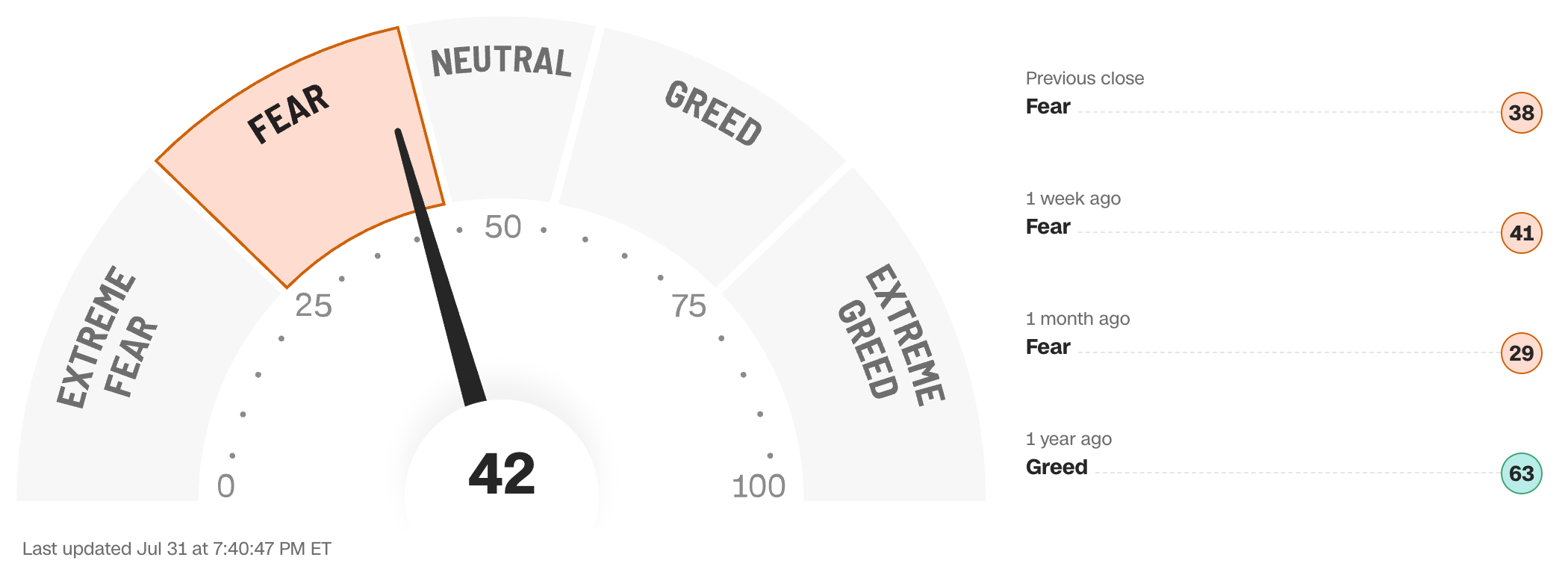
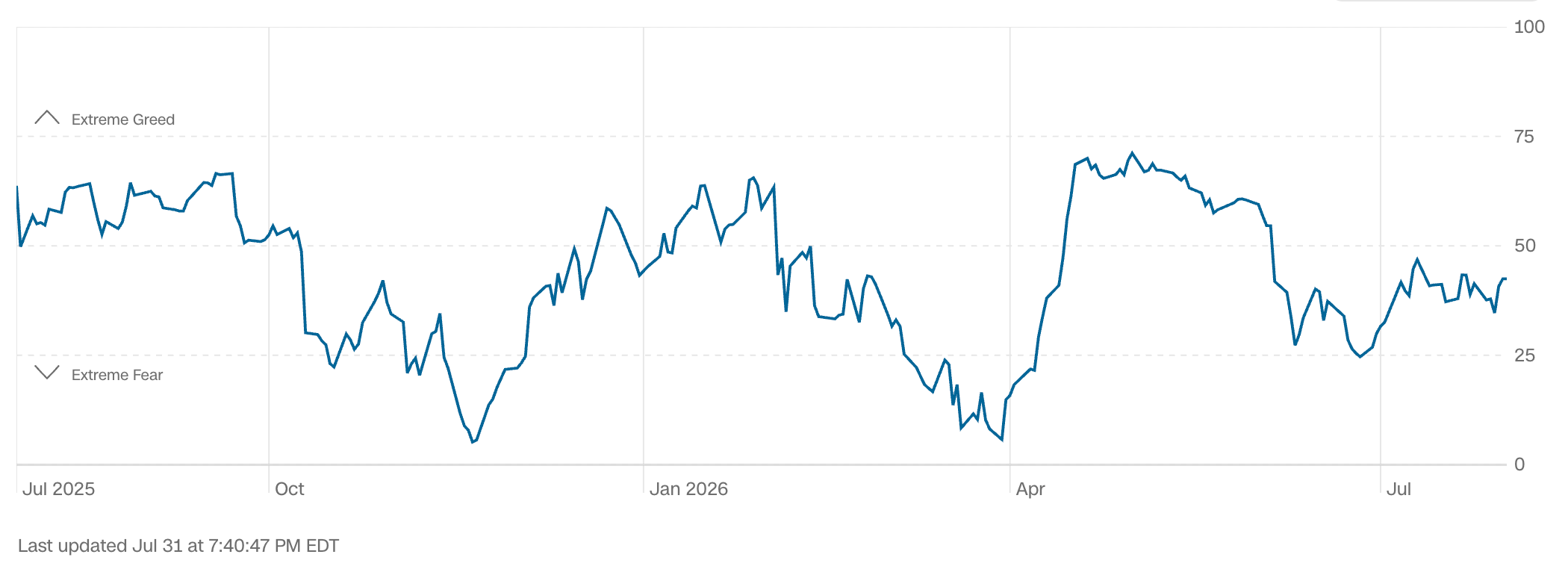
Data courtesy of CNN Business as of Friday’s market close.
The Fear & Greed Index from CNN Business can be used as an attempt to gauge whether or not stocks are fairly priced and to determine the mood of the market. It is a compilation of seven of the most important indicators that measure different aspects of stock market behavior. They are: market momentum, stock price strength, stock price breadth, put and call option ratio, junk bond demand, market volatility and safe haven demand.
Extreme Fear readings can lead to potential opportunities as investors may have driven prices “too low” from a possibly excessive risk-off negative sentiment.
Extreme Greed readings can be associated with possibly too-frothy prices and a sense of “FOMO” with investors chasing rallies in an excessively risk-on environment . This overcrowded positioning leaves the market potentially vulnerable to a sharp downward reversal.
WWW.ANGLIAADVISORS.COM | SIMON@ANGLIAADVISORS.COM | CALL OR TEXT: (646) 286 0290 | FOLLOW ANGLIA ADVISORS ON INSTAGRAM


